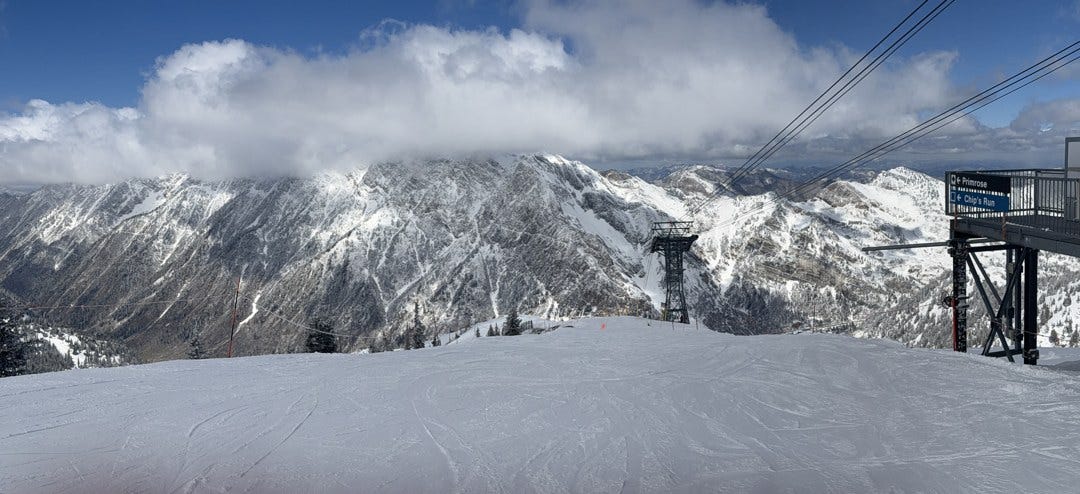
Weather control is no longer merely a theory, and it is no longer a topic left only to conspiracy theorists or late-night AM radio callers staring up at jet contrails. Today it is real, operational technology evolving right before our eyes, building the kind of changes across mountain watersheds and ski country that we are going to need a much broader, smarter conversation about in the years ahead.
Which brings me straight to the question every skier with a pulse is secretly thinking when they hear that a tech startup is flying cloud-seeding quadcopters into Wasatch winter storms: Is a 900-inch year something we can press a button and get?
Boy I hope so.
If somebody figures out how to push a button on a laptop and drop 900 inches of blower powder onto Little Cottonwood Canyon in a single season, I am ready to call the whole debate settled. Go ahead and build the gondola and sell Park City to Matthew Prince.
From Shoveling Out the Driveway to Shopping for Backyard Snow Guns
Saying out loud that I want more snow at the push of a button still feels a little surreal given where I started. I grew up in Western New York, where Lake Erie and Lake Ontario ran their own unregulated weather-modification program every winter. Back then, snow was not a scarce luxury commodity you tracked on ensemble weather models ten days out. Snow was a morning chore. It was my job to wake up in the dark before school, pull on boots, and dig out the cars at the end of the driveway so everybody could get down the road.
When you are fourteen years old with a heavy shovel in your hands at 6:00 AM, waiting for the town plow to throw a three-foot wall of gray slush back across the apron you just cleared, you never imagine you will grow up and ask whether human beings can engineer the sky to dump even more of it.
Except skiers are wired differently, and the obsession sneaks up on you. Back in Western New York, the local Rochester meteorologist Kevin Williams got the first backyard snowmaker I had ever heard of. If you grew up watching Western New York weather, you remember Kevin Williams tracking lake-effect bands like a general at a map table, and the day I found out he had his own snowmaking setup in his yard, a switch flipped in my head. I have been jealous of him until this very day. I look at home snowmakers online all the time. I still look at them now. Even though the cold-weather window is marginal in Virginia, I cannot promise my neighbors that there will not be a backyard snow gun coming soon to a Northern Virginia suburb near me.
The Eight Percent Problem and the Snow Birds at 15,000 Feet
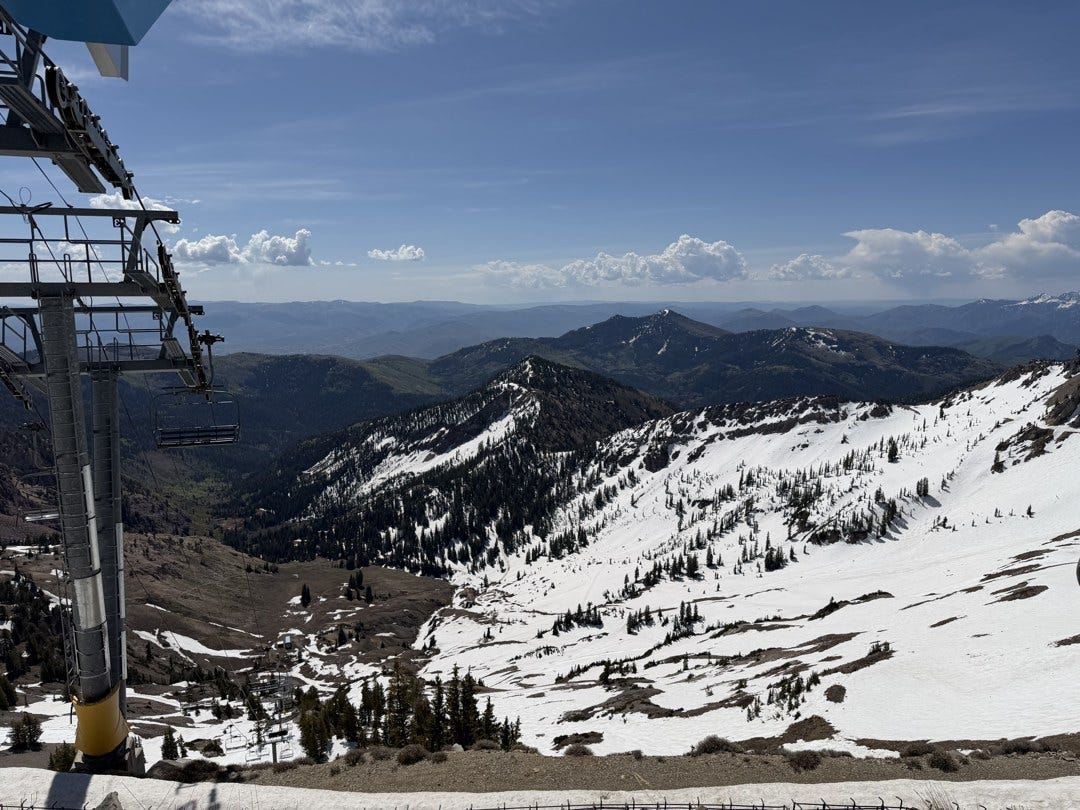
That backyard snowmaking itch is really about control, and even the biggest mountains in North America run into the limits of what cast-iron pipes and air compressors can cover.
Take Snowbird Mountain Resort. Snowbird averages more than 400 inches of natural snowfall a year across 2,500 skiable acres, with a November 27 target opening for the 2026 to 2027 season. Yet its ground-based snowmaking system covers only about 203 acres, or roughly 8 percent of the mountain. The resort added 11 new automated snow guns ahead of this winter to help fortify high-traffic lower runs and early-season bottlenecks. Those guns do critical work in November, and they will still never reach Mineral Basin, Peruvian Cirque, or the high chutes off the Tram. On the upper 92 percent of the mountain, either the sky delivers or you are skiing around granite.
That math is why Snowbird signed on as the first official ski-area partner of Rainmaker Technology Corporation, an El Segundo, California, weather-enhancement company. Drone operations have not launched at Snowbird yet, though they are slated to begin soon for the 2026 to 2027 winter.
Instead of bolting another tower gun onto a groomer run, this partnership sends up what I think of as the snow birds: 50-pound quadcopters that fly up 15,000 feet and precipitate real snow down onto the resort.
Think about the difference in what hits your skis. This is not fake snow, and it is not dense gun powder blasted out of a nozzle at 26 degrees wet-bulb to build a hardpack ribbon down the bottom of Gad Valley. It is literally an opportunity to turn on the clouds.
Technology and Company Brief: Inside Rainmaker and the Elijah Platform
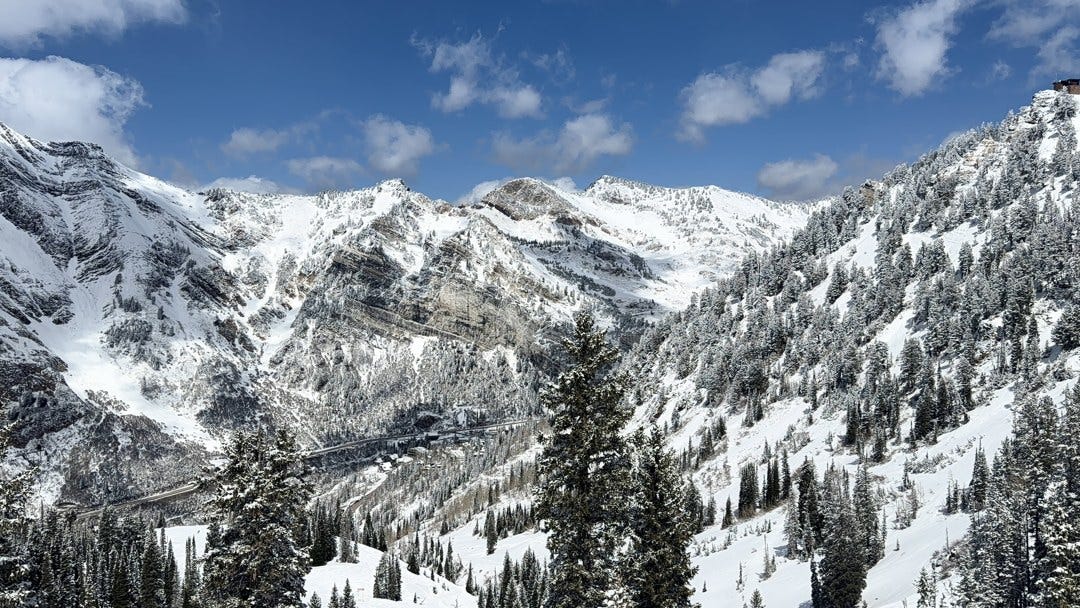
To understand what is actually flying into the Wasatch sky, it helps to separate the startup folklore from the flight hardware.
Rainmaker Technology Corporation was founded in the spring of 2023 by Augustus Doricko, a 26-year-old former UC Berkeley physics student who got into western water scarcity after working with Texas well drillers and farmers on agricultural water reporting. Based in El Segundo with a major operational hub in Salt Lake City and more than 100 employees, Rainmaker does not pitch itself as a boutique ski-resort toy. Its core mission is commercial weather enhancement and water security across drought-stressed Western river basins, reservoirs, and farmland, with ski mountains serving as the high-elevation catch basins where winter snowpack starts.
The workhorse of the system is Rainmaker’s proprietary quadcopter, named Elijah. Early on, when Rainmaker’s engineers tested commercial off-the-shelf drones inside freezing clouds at the FAA drone test range in Pendleton, Oregon, rime ice chewed the aircraft up in minutes. So the company designed and built its own airframe from scratch. Each Elijah quadcopter weighs roughly 50 pounds, is engineered to tolerate severe in-cloud icing, flies for about an hour per sortie, and can climb to a 15,000-foot ceiling while carrying onboard atmospheric sensors and custom steel tubes loaded with silver iodide flares.
When a storm system lines up with enough supercooled liquid water, water droplets that remain liquid well below 32 degrees Fahrenheit because they lack a microscopic surface to freeze onto, Rainmaker’s field crews launch between 2 and 16 Elijah drones at a time. Flown from laptops by ground operators working with meteorologists, the drones climb straight into the coldest, most productive band of the cloud deck rather than burning flares on a valley floor and hoping canyon winds carry the plume uphill. Once in position, the drone ignites its silver iodide flares. Silver iodide has a hexagonal crystal lattice that is nearly identical to natural ice. Those microscopic particles act as a scaffold inside the cloud, triggering supercooled droplets to lock into ice crystals, grow into snowflakes, and fall out of the storm.
For anyone wondering what all that flare smoke leaves behind on the mountain, the chemistry math is tiny. A typical seeding run disperses between 20 and 50 grams of silver iodide, roughly the weight of a handful of quarters, spread across thousands of square kilometers. Silver iodide is highly insoluble in water, meaning it does not dissolve into a biologically active form in soil or snowmelt, and resulting ground concentrations measure in parts per quadrillion, far below Food and Drug Administration and Environmental Protection Agency safety thresholds.
Where Rainmaker claims its real breakthrough is proving that the snow actually came from its drone. Since General Electric researchers first discovered glaciogenic cloud seeding in 1946, the industry’s Achilles’ heel has been attribution: if you burn a flare inside a winter storm and it snows an inch an hour later, how do you prove the storm was not going to drop that inch anyway?
Rainmaker pairs its drone GPS tracks with dual-polarization NEXRAD weather radar and GOES satellite imagery to track the microphysical chain reaction in real time. When a drone seeds a line through a deck of supercooled liquid cloud, satellite imagery can capture a literal hole in the cloud, a distinct trench along the exact flight path where liquid droplets rapidly convert into ice crystals and fall out as precipitation. Using that radar and satellite validation method, Rainmaker reports logging 82 unambiguous seeding signatures as of April 2026, generating 143 million gallons of water across operations in Utah and Oregon, followed by 19 million gallons of precipitation in a three-hour window over Alaska’s Kenai Peninsula near Homer in August 2026. Traditional cloud seeding programs estimate a 5 to 12 percent precipitation boost under the right conditions, and Rainmaker aims to meet or beat that ceiling.
The National Picture: Cloud Seeding Across the U.S. Today
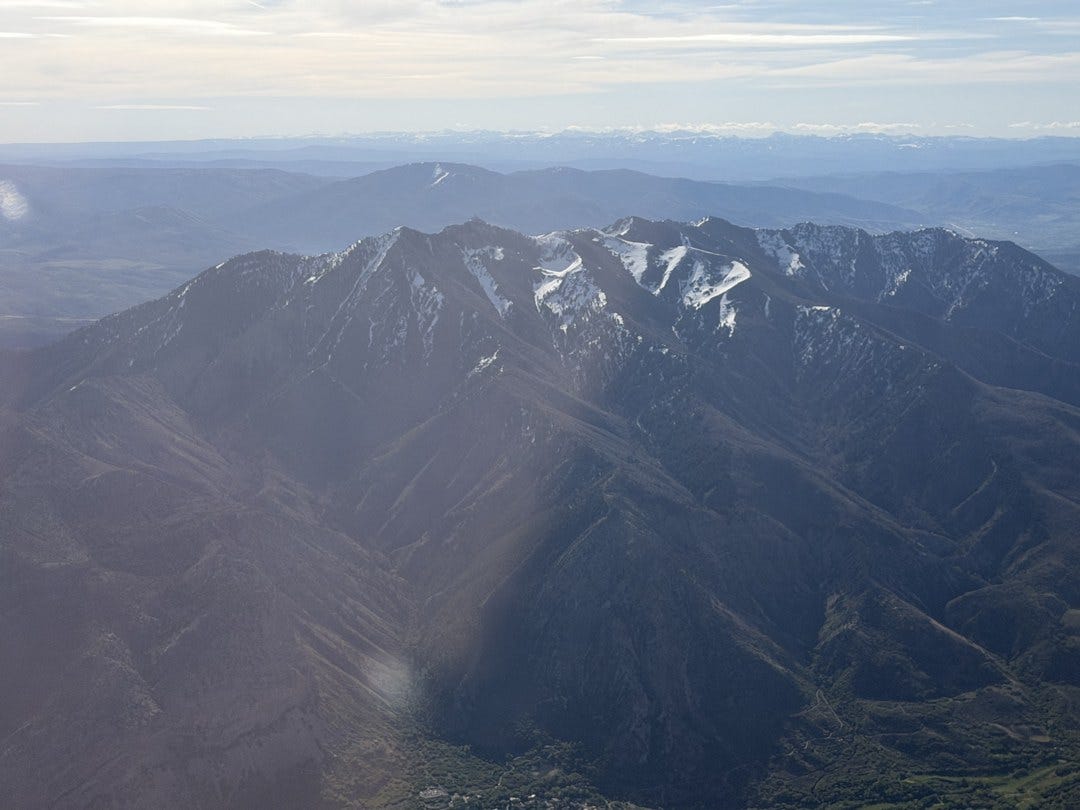
If the idea of laptop-flown drones squeezing extra snow out of a storm sounds futuristic, the broader practice of cloud seeding is already woven into the plumbing of the American West.
Right now, roughly ten states run active, operational cloud seeding programs, led by Utah, Colorado, Wyoming, Idaho, Nevada, California, Texas, Kansas, Oklahoma, and North Dakota, along with watershed projects in New Mexico. Coordinated through long-running technical bodies like the Weather Modification Association and the North American Weather Modification Council, the overwhelming majority of those state and water-district programs have nothing to do with lift tickets. On the Great Plains in Texas, Kansas, Oklahoma, and North Dakota, aircraft seed warm-season convective clouds for agricultural rainfall and hail suppression to protect crops. Across the mountain West, utilities, irrigation districts, and state water boards seed winter storms to build high-mountain snowpack so spring runoff fills municipal reservoirs and hydroelectric dams.
No state has leaned harder into that strategy than Utah. In 2023, the Utah Legislature approved a $12 million one-time investment alongside a $5 million ongoing annual cloud-seeding budget, making Utah the largest direct state funder of weather modification in the country. For the winter 2026 to 2027 season running from November 1 through April 30, the Utah Division of Water Resources is running a statewide drone cloud-seeding program across four major watersheds: 21 drones assigned to the Bear River Basin, 6 drones at the Weber Basin, 12 drones in the Virgin River Basin, and roughly 9 drones targeting the Great Salt Lake watershed.
Even with tens of millions of state dollars on the table, the federal science referees remain cautious. In its December 2024 assessment of cloud-seeding technology, the U.S. Government Accountability Office noted that while the physical principles of ice nucleation are well established, the net water-yield benefits of operational cloud seeding remain unproven at scale. The core scientific hurdle is simple: no two clouds are identical, and there is no control cloud floating alongside a storm to show what would have fallen naturally. To close that gap, independent validation work is now underway involving the National Center for Atmospheric Research and two Utah universities, building on earlier landmark field campaigns that used airborne radar and snow gauges to trace seeded plumes from cloud to ground.
At the same time, weather modification has walked straight into a national political crosswind during 2025 and 2026. At the federal level, the Weather Modification Reporting Act of 1972 requires operators to file project reports with NOAA at least ten days before flying, yet gives NOAA zero authority to license, permit, or regulate the flights. In July 2025, members of Congress introduced H.R. 4403, the Clear Skies Act, proposing a sweeping federal ban on weather modification. Meanwhile, state legislatures have split in opposite directions. Florida enacted Senate Bill 56 effective July 1, 2025, making weather modification and cloud seeding a felony, and Tennessee and Louisiana passed their own atmospheric-release restrictions, often lumping seventy-year-old silver iodide cloud seeding together with speculative solar geoengineering theories. Out West, states like Utah, Idaho, and Montana have gone the other way, updating oversight rules while explicitly protecting and funding cloud seeding as a critical drought tool.
Industry Voices and Where the Ski Business Stands
When you look at who is actually talking on the record about drone cloud seeding right now, the split between the water managers, the startup engineers, the academic climatologists, and the ski resorts tells you almost everything about where this industry sits in its maturation curve.
At Snowbird, President and General Manager Dave Fields has been candid and measured about why the resort signed on. Speaking with GearJunkie, Fields pointed out that lake-effect moisture off the Great Salt Lake naturally adds 10 to 20 percent to Little Cottonwood Canyon’s snowfall, and that a shrinking Great Salt Lake threatens both the state’s water supply and the resort’s snowpack. Snowbird has participated in conventional ground-based and fixed-wing seeding for years, and Fields views Rainmaker’s drones as a logical step forward rather than a miracle cure. As Fields put it, he does not think cloud seeding is a silver bullet, calling it one of the arrows in the quiver and noting that whether a program adds 5 percent, 7 percent, or 10 percent, on a mountain that averages 400 to 500 inches a year, that extra percentage adds up to a lot of snow.
On the state water-policy side, the officials writing the checks are openly enthusiastic. Jonathan Jennings, Meteorologist and Cloud Seeding Coordinator for the Utah Division of Water Resources and President of the Weather Modification Association, oversees the state’s expanding drone and ground network and estimates Utah’s broader seeding program yields rough water costs around $55 to $60 per acre-foot, compared to thousands of dollars per acre-foot for new water infrastructure or desalination. Joel Ferry, Executive Director of the Utah Department of Natural Resources, told the Deseret News that given the new radar validation tools, Utah’s partnership with Rainmaker is the smartest thing the state can be doing with its money as part of a wider conservation and water-supply package.
Inside Rainmaker, Doricko and his head of research, atmospheric chemist Dr. Kaitlyn Suski, who spent 18 years studying aerosol and cloud microphysics before leading the company’s targeting and satellite-validation team, are talking openly about scaling across the ski industry. In an October 2026 interview with SKI Magazine, Doricko said the technology is suited to making ski resorts less volatile between boom and bust years, confirmed he is in talks with additional resorts in Utah, Colorado, and California, and even floated the goal of buffering Utah’s snowpack ahead of the 2034 Salt Lake City Winter Olympic Games.
Then you talk to the university atmospheric scientists who have spent decades flying research planes through winter storms, and the brakes come on fast. Bart Geerts, a climatologist and professor of atmospheric science at the University of Wyoming who helped lead the National Science Foundation and National Center for Atmospheric Research SNOWIE cloud-seeding experiments alongside researchers like NCAR project scientist Sarah Tessendorf and University of Wyoming professor Jeffrey French, told SKI Magazine this month that while Rainmaker’s scale and validation focus are a business-model game changer, the real-world snowfall math is still sobering. Geerts pointed out that Rainmaker’s headline 19-million-gallon test in Homer, Alaska, fell across 100 square miles, which works out to roughly 0.01 inches of rain, or about one-tenth of an inch of snow. Tracing a clean radar trench inside a small, shallow coastal cloud is one thing. Proving that a couple of drones can noticeably juice a massive, turbulent Wasatch winter slammer, where natural dynamics are already cranking at full throttle and interior mountain air is often drier, is a completely different scientific problem.
Just as telling is who is not talking. Over the past few decades, resorts including Vail, Aspen, Winter Park, Telluride, Wolf Creek, Deer Valley, Park City, and Palisades Tahoe have all quietly funded or participated in cloud seeding at one point or another. Yet outside of Dave Fields at Snowbird, you will not find a line of ski-resort CEOs stepping up to a microphone in 2026 to brag about hiring weather-modification drones.
That silence is its own signal. We are in the awkward teenage chapter of weather enhancement. Until the independent validation studies from NCAR and Utah’s universities publish multi-season data proving how many extra inches actually land inside a specific resort boundary rather than drifting into the next county, most ski-industry executives would rather let Snowbird and the Utah water board take the public arrows first.
P-TEX vs. Cloud Seeding: The 10 Questions We Should Be Asking
Strip away the venture-capital pitch decks and the legislative shouting matches, and for a working skier in November and December, this comes down to a very practical question at the work bench.
If you ski Snowbird in December before the deep winter base fills in Peruvian Gulch and the Cirque, you know the sound of sintered base meeting Little Cottonwood granite. You know what the ski shop charges for P-TEX repairs, base welds, and stone grinds after a bony early-season weekend. If a fleet of 50-pound snow birds flying at 15,000 feet can turn a 10-inch storm into an 11-inch or 12-inch storm, adding an extra 35 or 40 inches of real, natural-crystal snow across the upper mountain over the course of a winter, would I rather pay the shop for P-TEX or pay a fraction of my pass toward seeding the clouds?
I know which way my ski bases vote. Still, wanting more snow and knowing how this technology should be governed are two different things. Instead of pretending we already have the final verdict, here is the prompt science on the real science, and the ten questions we should all be asking as the first drones get ready to launch over the Wasatch.
What does the independent scorecard actually say? When NCAR and the Utah university researchers finish auditing Rainmaker’s radar and SNOTEL data across a full winter, does the 5 to 12 percent precipitation bump hold up inside big, chaotic mountain storms, or does it mostly show up in smaller, marginal cloud decks?
Can you really aim a seeded snowflake at a resort boundary? Wind shear in Little Cottonwood Canyon is legendary. When an Elijah drone ignites a flare at 15,000 feet, how reliably can meteorologists target Snowbird’s cirques versus dropping that snow five miles downwind in the Heber Valley or Millcreek?
Who owns the moisture in a cloud? Even though atmospheric scientists note that storms only precipitate a fraction of their total moisture and recharge as they move, how will downwind neighbors, counties, and states react when upstream resorts and water districts start actively harvesting supercooled water out of passing fronts?
Would I rather pay for P-TEX or pay for cloud seeding? If drone seeding eventually becomes a standard line item in a ski resort’s winter operating budget alongside grooming and lift maintenance, how much are skiers willing to see baked into a season pass for an extra 30 inches of high-alpine coverage?
What happens in a truly dry winter? You cannot seed a bluebird sky. If a persistent high-pressure ridge parks over the West like it did during the lean stretches of last winter, does cloud seeding give resorts a real buffer, or does it only make good storm cycles slightly deeper?
How do we keep legitimate water science separate from conspiracy politics? With states like Florida and Tennessee passing blanket atmospheric bans while Utah and Idaho invest millions in watershed drones, how do scientists and skiers have an honest, transparent public debate without getting swallowed by chemtrail panic?
Is federal oversight overdue? Should the United States keep relying on a 1972 NOAA paperwork law that only asks operators to mail in a notice ten days before launch, or is it time for modern federal and state standards covering airspace, flare chemistry, and public data reporting?
What does twenty years of silver iodide look like on a single peak? The current environmental math is reassuring at 20 to 50 grams per flight and parts per quadrillion on the ground, and Utah funds ongoing soil and water monitoring. If concentrated drone corridors fly the same canyon storm after storm for decades, what long-term baseline testing should resorts be required to publish every spring?
Does top-down cloud seeding change how resorts invest in bottom-up snowmaking? Ground guns require massive volumes of local water and electricity to cover 8 percent of a mountain, while cloud seeding uses pennies on the dollar per acre-foot across the whole watershed. How should a modern mountain balance pipes on the lower runs with drones over the high peaks?
If we can turn on the clouds for reservoirs and ski hills, where is the line? Today it is 50-pound quadcopters helping the Great Salt Lake and filling in the bony sharks at Snowbird. Tomorrow it might be the 2034 Winter Olympics and commercial weather contracts across every range in the West. Who decides when, where, and how hard we press the button?
I do not have all ten answers yet, and honestly, neither does anyone else. What I do know is that the drones are built, the state contracts are signed, and the first drones are getting ready to climb into the clouds over Little Cottonwood Canyon. What do we think about this?
Check your beacon, point ‘em downhill, and drop in.
Sources and credits: Reporting and technical data via Rainmaker Technology Corporation, Snowbird Mountain Resort, the Utah Division of Water Resources Cloud Seeding Program, the U.S. Government Accountability Office report on Cloud Seeding Technology, the National Center for Atmospheric Research, SKI Magazine, Deseret News, and GearJunkie.
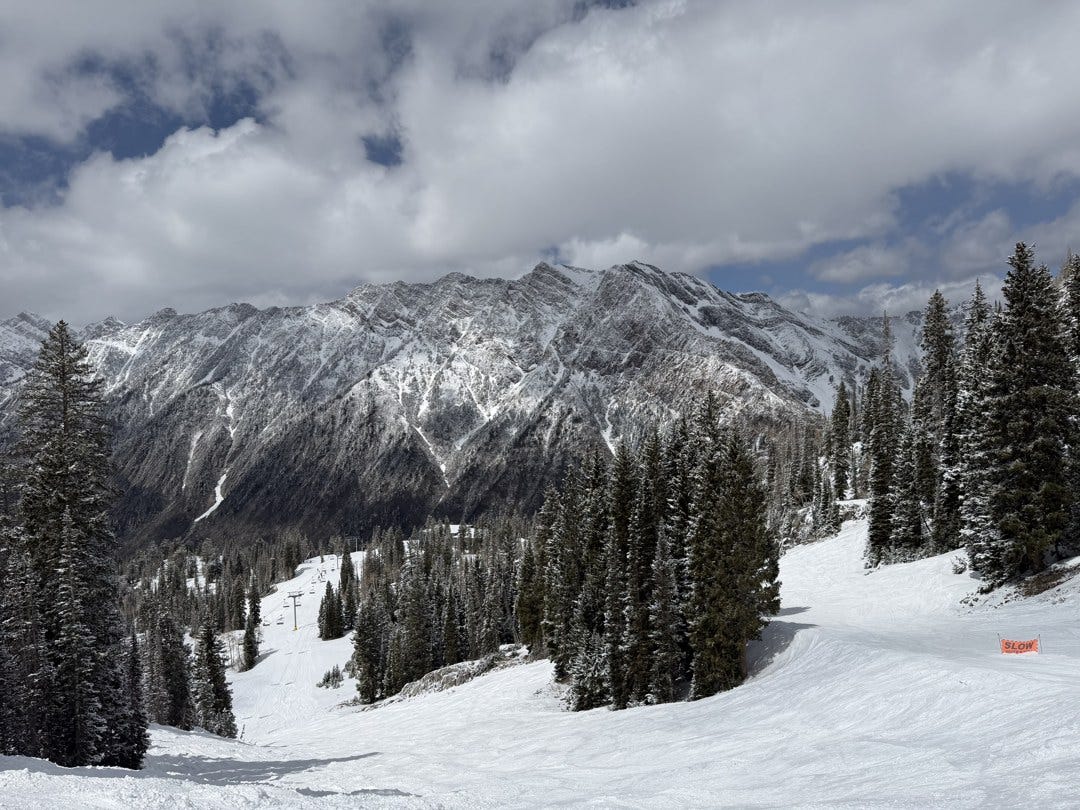
Photo credits: All Snowbird, Little Cottonwood Canyon, and Wasatch Range photographs by Brent Gardner.
